When Rain Becomes Our Teacher: The Grade 3 Flood Solutions Adventure 3rd Grade (PBL Unit 2 2025 / 2026)

AIS Innovation Center

Date:

November 2025

Participants:

3th Grade

Overview:

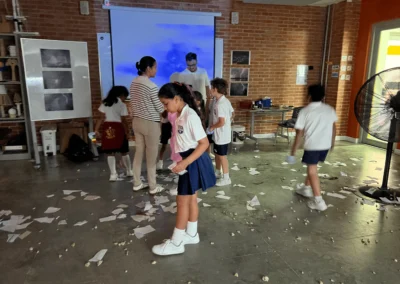
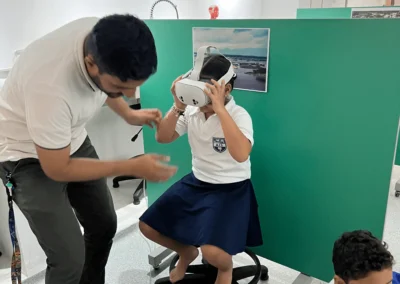
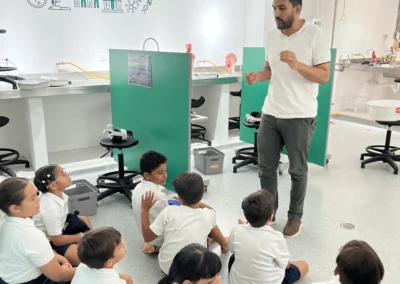
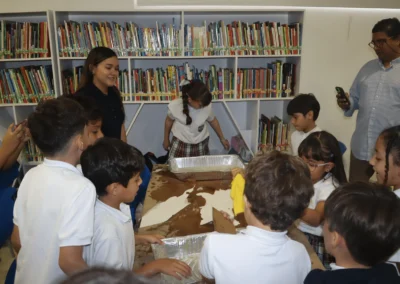
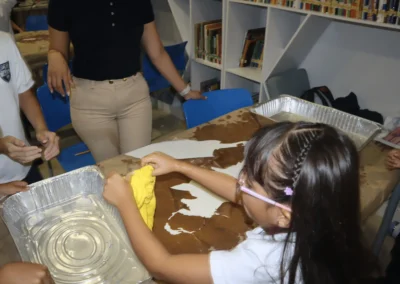
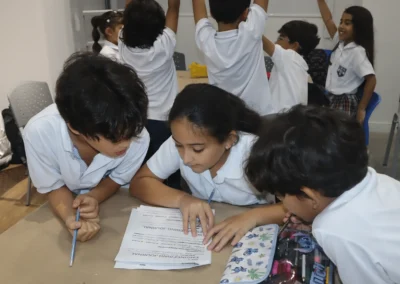
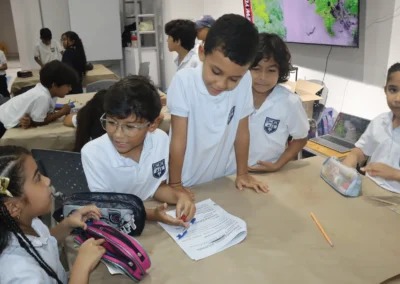
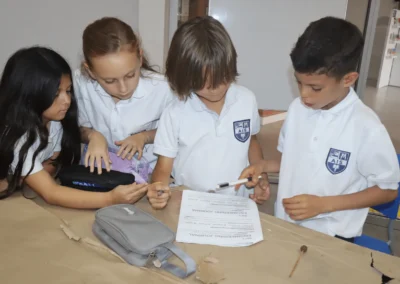
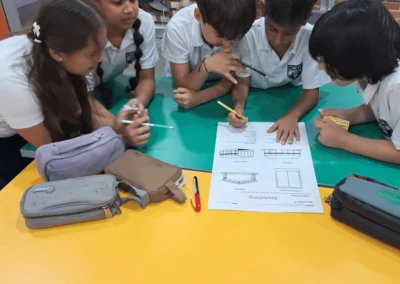
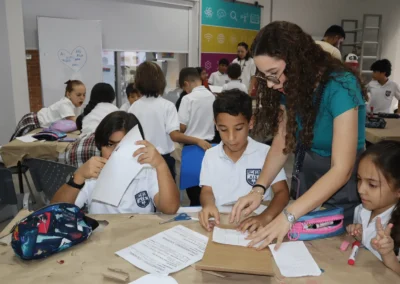
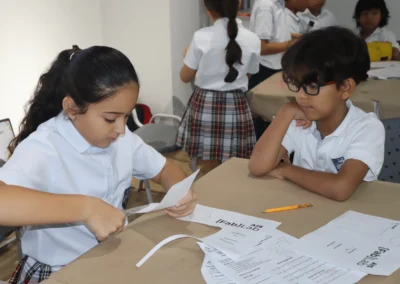
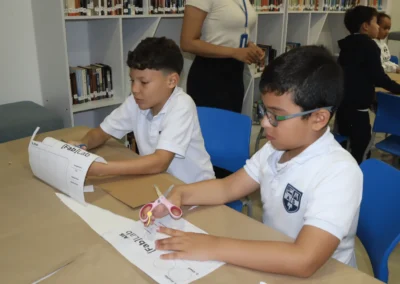
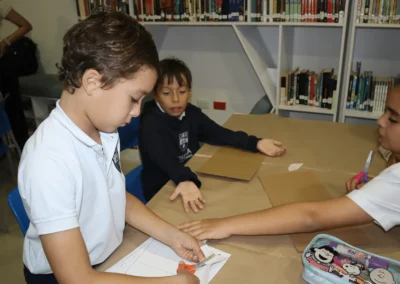
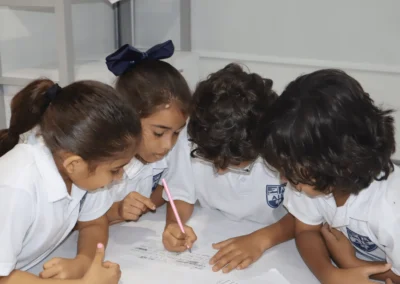
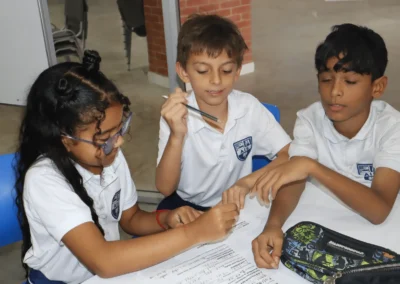
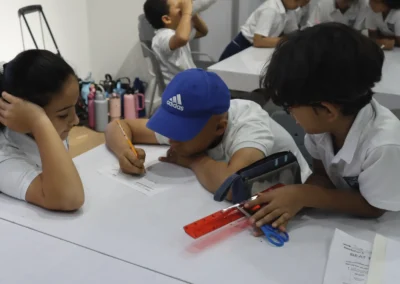
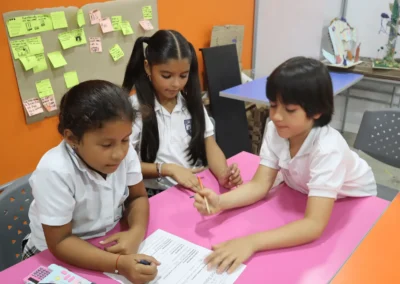
Third graders transformed a real playground flooding problem into an engineering adventure. Through hands-on experiments, prototype building, and multiple testing rounds, students learned how water behaves and designed creative solutions to manage and redirect rainwater. During Exhibition Day, they confidently presented their final models, using data and scientific reasoning to explain how their designs could help improve our school’s outdoor spaces.

Driving Question:

¿How can we design real engineering solutions to help our playground stay safe and functional during heavy rain?

Purpose of the Project:

To help students understand how water behaves and how engineering design can solve real-world problems, by investigating flooding on the playground and creating evidence-based solutions to manage rainwater effectively.

Objectives of the Project:

Investigate how water moves and identify real flooding problems in the playground.

Apply the engineering design process to create, test, and improve rainwater solutions.

Communicate and justify their designs using data, observations, and scientific reasoning.

The Challenge That Started It All
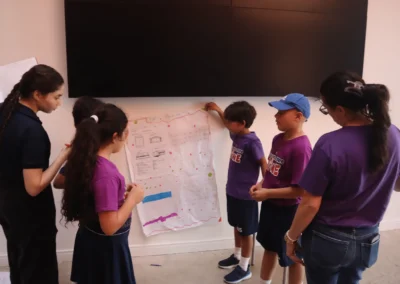
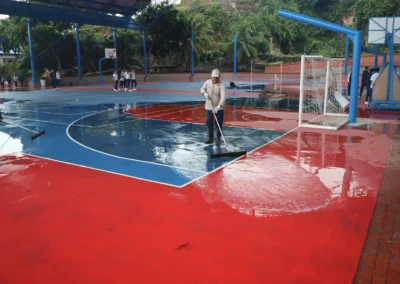
Picture this: It’s a typical rainy morning in Barranquilla, and our third graders are watching water pool in their favorite playground spots. The basketball court becomes a lake. The pathway to the swings turns into a river. Their play spaces transform into water worlds.
But instead of complaints, we heard curiosity. “Why does the water stay there?” “Could we fix this?” “What if we could be the ones to solve it?”
And that’s when our Grade 3 engineers were born.
Culminating Product

Students will design and build a prototype that solves a real flooding problem on the school playground by redirecting, absorbing, or managing rainwater through structures such as barriers, channels, slopes, or drainage systems. Along with their model, students will provide a brief recorded or written explanation describing how their solution works, using evidence from their tests and observations, and outlining basic steps for how the design could be implemented in a real setting.

Recorded/written explanation that:
Predicts and explains how a change (a single variable: e.g., drought, loss of decomposers, or excess nutrients) affects energy flow and the cycling of matter.
Proposes a realistic solution (who implements it, basic steps).

newsletter 3th unit 2

Question for this week:

¿How can we use engineering solutions to protect our playground from flooding after heavy rains?
Monday: The Day We Became Water Detectives
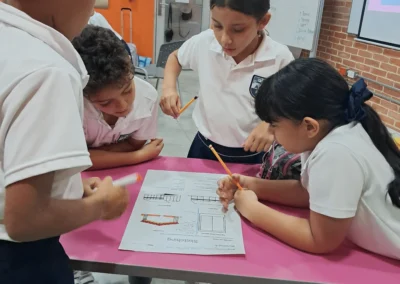
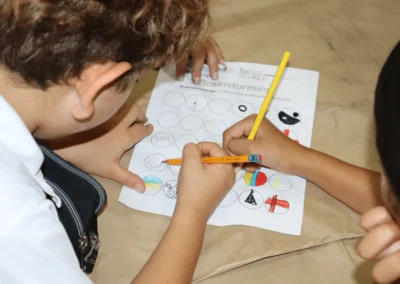
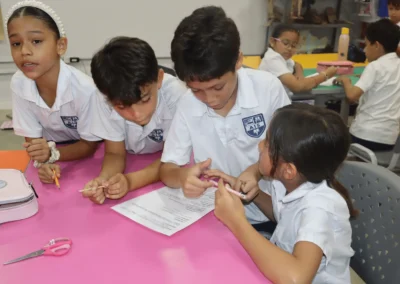
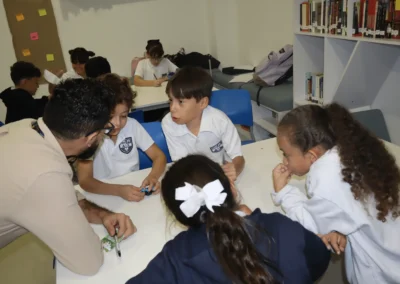
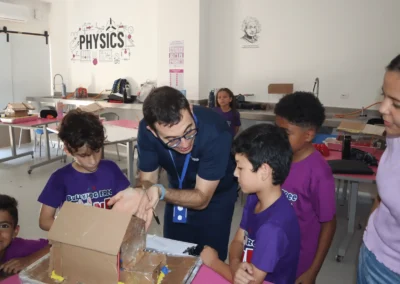
Our journey began with clipboards, pencils, and a mission: understand our enemy before we could defeat it. Our young engineers spread across the playground, mapping every puddle, every stream, every spot where water misbehaved.
Back in the Innovation Center, the real magic began.
“Today, you’re not students – you’re engineers with a real problem to solve,” we told them. Their eyes lit up.
The First Discovery: Not All Roofs Are Equal
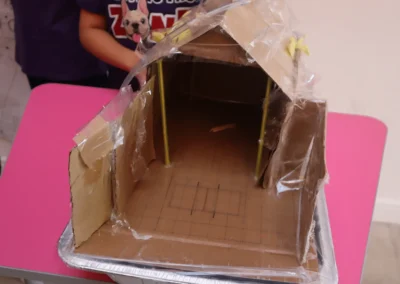
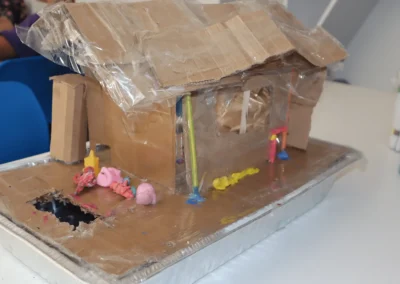
Armed with spray bottles and cardboard houses, teams discovered their first engineering truth. Mateo’s team watched in dismay as water pooled on their flat roof, seeping through within seconds. But when Isabella tilted her roof just slightly – whoosh! – the water rolled right off.
“It’s like a slide for water!” shouted Sofia, and suddenly everyone understood: angle is everything.
The Great Wall Experiment
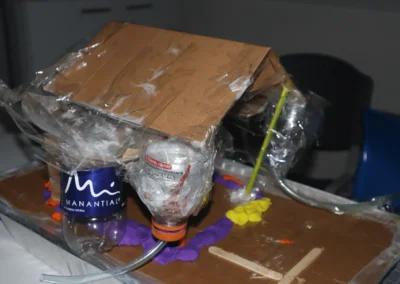
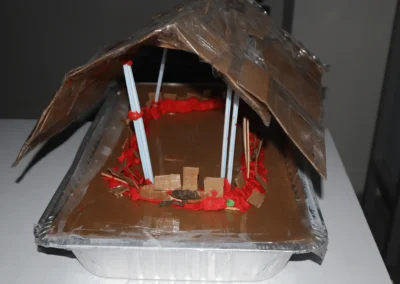
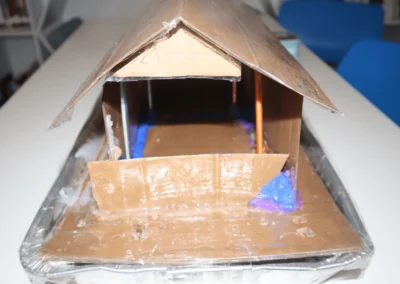
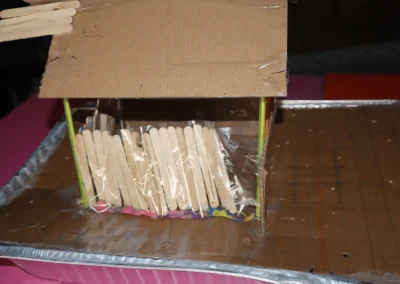
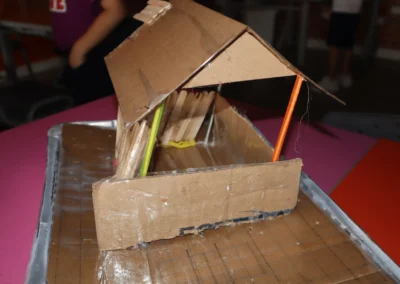
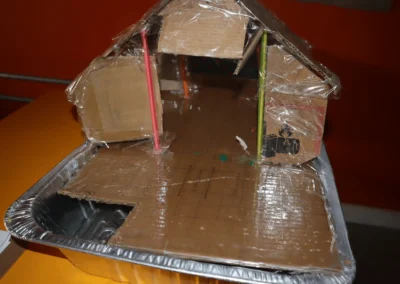
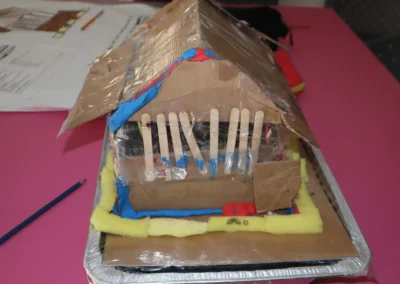
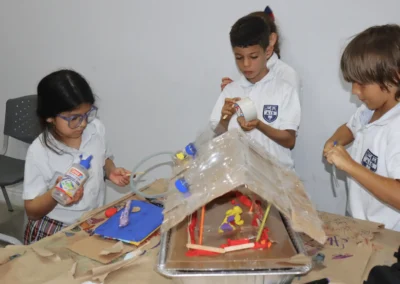
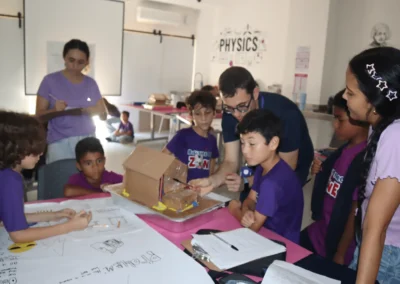
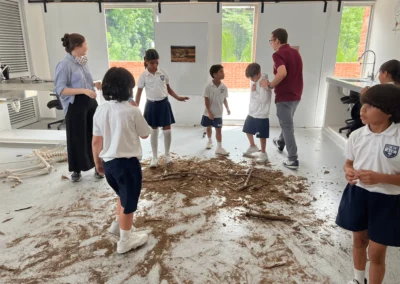
Next challenge: protect a tiny model house from flooding. With only clay, craft sticks, and determination, our engineers built their first flood walls.
Santiago’s team learned the hard way – a beautiful tall wall means nothing if water can sneak underneath. María’s group discovered that tiny gaps between clay sections became highways for water. But when Alejandro’s team created a continuous, sealed barrier, their house stayed perfectly dry.
“We’re like the real engineers who protect cities!” Valentina exclaimed. She wasn’t wrong.
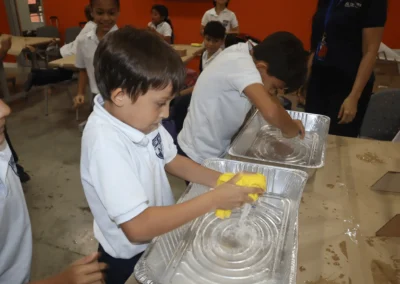
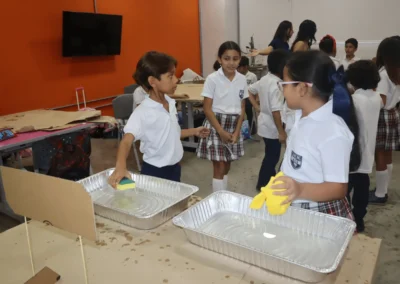
The Sponge Olympics
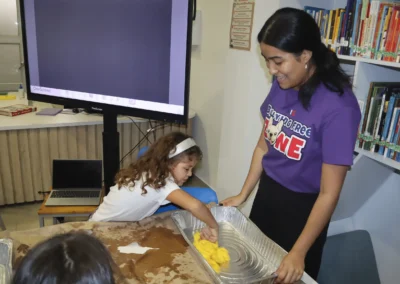
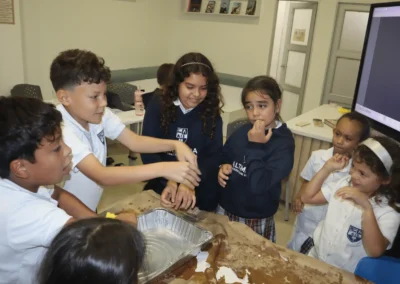
The afternoon brought competition and laughter. Three materials. One mission: move water from the “flood zone” to the “safe zone.” No running allowed!
The gymnasium erupted in focused chaos as teams raced back and forth, testing sponges, cloth, and cotton. Daniel’s team started with cotton balls – disaster! More water on the floor than in the bucket. But the large sponges? “It’s like a water backpack!” Lucas announced, squeezing nearly a cup of water into the collection bucket.
Data doesn’t lie: Sponges moved 3x more water than cotton. Our engineers had discovered absorption science through sweat and laughter.
Day 1 Lesson: Water follows rules. Learn the rules, control the water.
Day 2 Lesson: Great engineers dream big, then build what works.
Tuesday: From Problems to Possibilities
Day two dawned with a new energy. Our engineers weren’t just identifying problems anymore – they were designing solutions.
The Aqueduct Challenge: Making Water Go Where We Want
“Ancient Romans moved water across valleys. Today, you’ll do the same!”
The challenge seemed impossible: move water from a pitcher on a high table to a bucket on the floor, using only tubes and determination. But our engineers were ready.
Emma’s team created elegant curves. Carlos’s group built a spiral system that looked like art. Ana’s team failed three times before discovering the critical truth: without enough slope, water simply refuses to move.
“Water is lazy!” Tomás declared. “We have to make it want to go downhill!”
The Design Storm
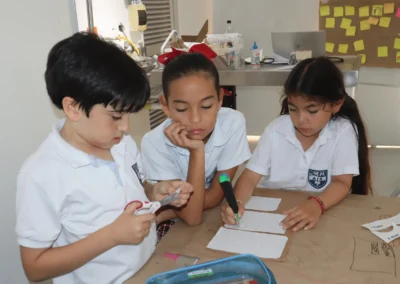
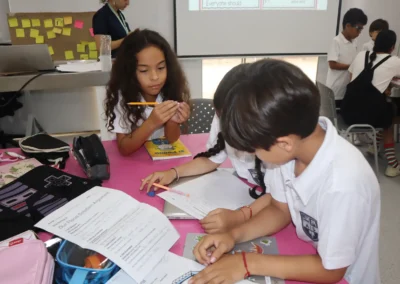
Armed with lessons from two days of experiments, teams attacked their biggest challenge yet: design a real solution for the playground flooding.
The Innovation Center became a storm of creativity:

  • Camila sketched underground drainage tunnels
  • Jorge designed enormous umbrellas for the entire playground
  • Lucia invented sponge sidewalks that could absorb rain
  • Miguel created a roof system that would channel all water to gardens.
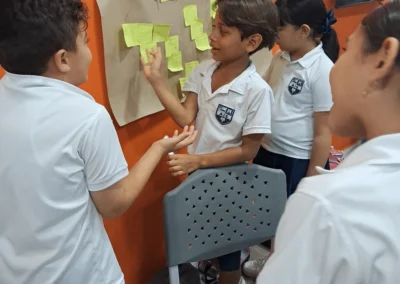
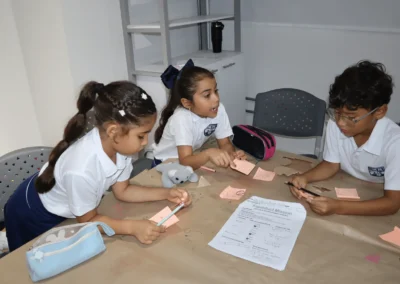
  • Four designs per team. 10 minutes each. No idea too wild.
    By afternoon, each team had selected their best concept. Not the coolest. Not the biggest. The one their experiments proved would actually work.
    Day 2 Lesson: Great engineers dream big, then build what works.

    Wednesday: When Ideas Become Reality
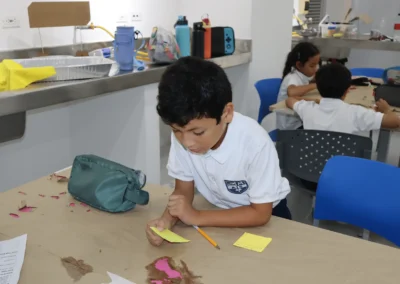
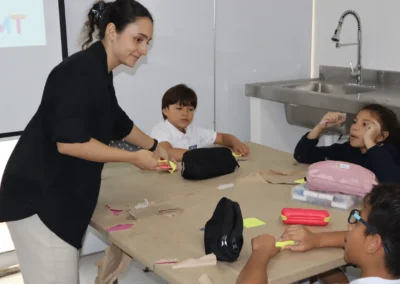
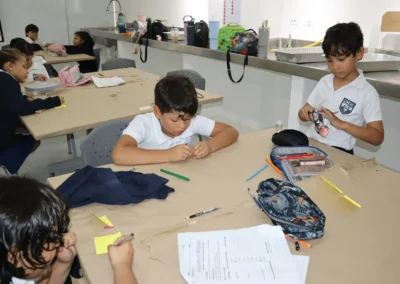
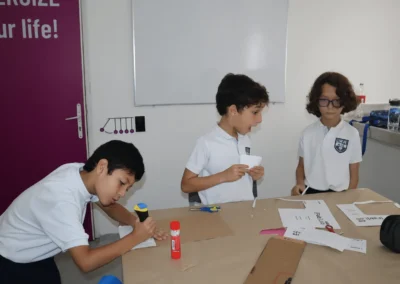
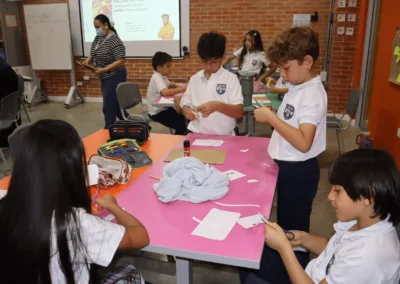
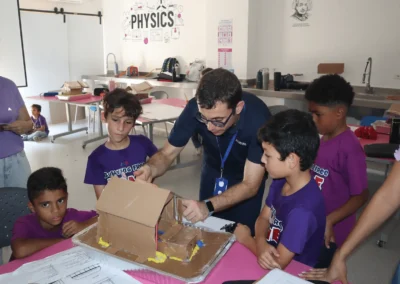
    The building day. The day when sketches transformed into prototypes, when theories met reality.
    Morning: The Great Construction
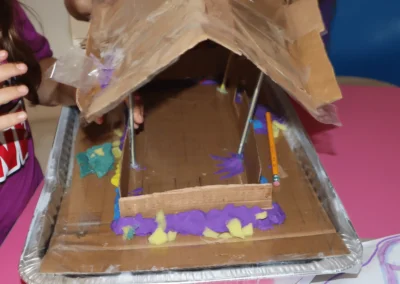
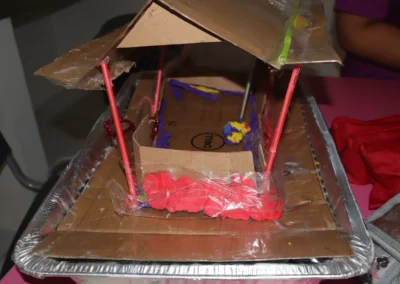
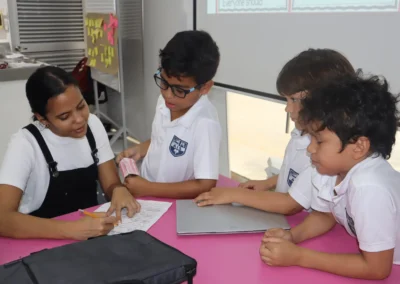
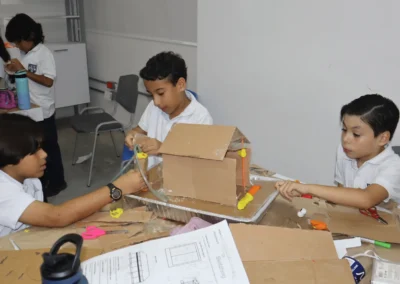
    The Innovation Center transformed into a construction zone. Three zones, three different flooding problems:

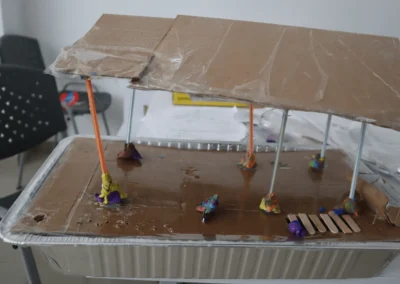
  • Column Edge Crisis: Water cascading off roof edges
  • Perimeter Drain Disaster: Overwhelmed drainage systems
  • Low Corner Lake: The eternal playground puddle

  • Each team received their assigned zone and attacked it with purpose.
    Andrés’s team, tackling the Column Edge, built angled deflectors from plastic sheets. “We’re giving the water a path to follow instead of fighting it!”
    Paula’s Perimeter Drain team created a filter system using sponges and gravel. “Clean water drains faster,” she explained like a veteran engineer.
    The Low Corner team, led by Roberto, built an ambitious combination: barriers to redirect, channels to guide, and absorption materials to handle overflow.

    Afternoon: The First Test of Truth
    Reality is a harsh teacher. When water met prototypes, some celebrations turned to gasps.
    David’s “perfect” wall had a tiny gap – water found it immediately. Sarah’s drainage system worked beautifully… until it overflowed. Nicole’s absorption zone became saturated in seconds.
    But here’s where our engineers shined: no tears, no giving up. Just observation, notes, and determination.
    “Failure is data!” became the afternoon’s motto.
    Day 3 Lesson: First attempts teach us what second attempts need.
    Day 4 Lesson: Good engineers build solutions. Great engineers prove they work.
    Thursday: The Power of Iteration
    Thomas Edison tried 1,000 times to make a light bulb. Our engineers only needed two attempts to revolutionize their designs.
    Morning: The Phoenix Rises
    Armed with yesterday’s “data” (failures), teams rebuilt with precision:

  • Gaps were sealed with surgical accuracy
  • Overflow systems were added to drainage designs
  • Absorption materials were layered, not just placed

  • Isabella’s team added something unexpected: a tiny garden area where excess water could be useful, not problematic. “Why waste the water when plants need it?”

    The Test That Counted
    Test 2 was different. Students measured everything:

  • Exact water volumes redirected
  • Precise areas kept dry
  • Time for drainage completion

  • When Martín’s team achieved 89% water redirection (up from 34% in Test 1), the celebration could be heard across campus.

    Afternoon: Building the Case
    “It’s not enough to solve the problem. Engineers must explain WHY it works.”
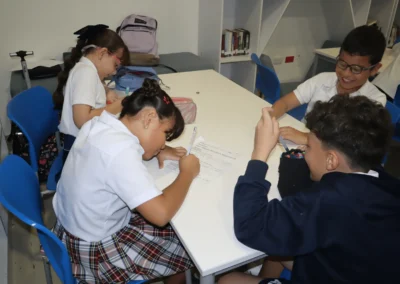
    Enter the CER method – Claim, Evidence, Reasoning. Our third graders became scientists:
    Claim: “Our angled barrier system effectively prevents playground flooding.” Evidence: “Test data shows 15 square meters stayed completely dry, compared to only 3 square meters without our system.” Reasoning: “This works because water follows gravity, and our angles guide it away from play areas into absorption zones.”
    Professional engineers couldn’t have said it better.
    Friday: The Day We Shared Our Genius
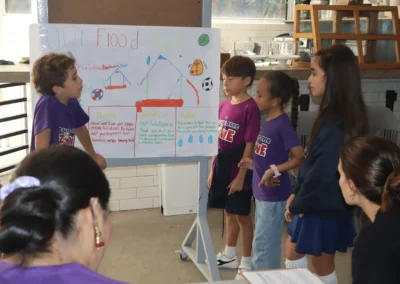
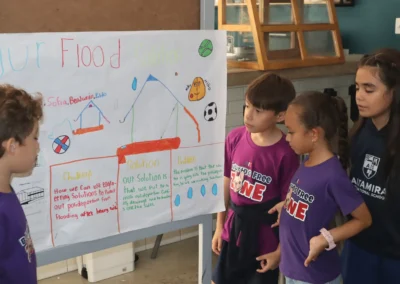
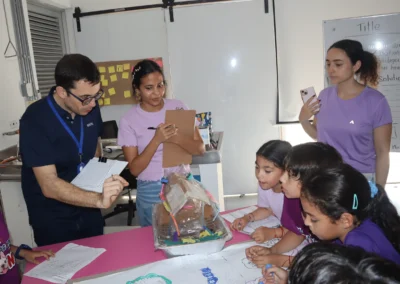
    The Innovation Center opened its doors to parents, teachers, and fellow students. Our Grade 3 engineers stood proudly beside their prototypes, ready to change minds and inspire action.
    The Presentations That Amazed
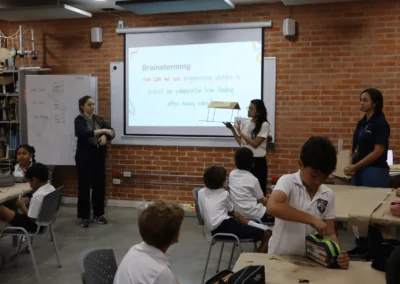
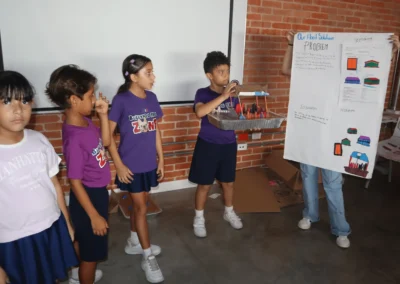
    Each team had 5 minutes to tell their story. But these weren’t just presentations – they were performances of passion:
    Santiago’s team demonstrated their solution live, pouring water while explaining each component’s purpose. Parents filmed in amazement.
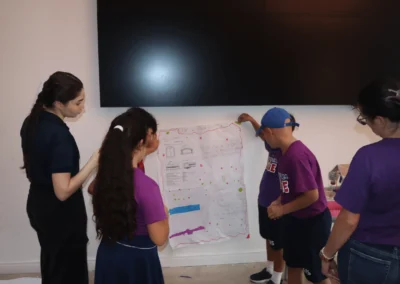
    María’s group created a before-and-after visualization that made the problem and solution crystal clear.
    Lucas’s team turned their presentation into a news report: “Breaking news from the Innovation Center: Third graders have solved the playground flooding crisis!”
    The Unexpected Moment
    The most powerful moment came from quiet Elena, who rarely spoke in class. Standing before fifty people, she explained her team’s drainage system with such clarity and confidence that the audience erupted in applause.
    “I understand how water thinks now,” she said. “So I can tell it where to go.”
    Her mother cried. Her teacher beamed. Her teammates cheered.
    The Real Victory
    Principal Dr. Zabarain asked the question everyone was thinking: “Should we implement these solutions on our actual playground?”
    The roar of “YES!” from our engineers could be heard in the next building.
    Day 5 Lesson: Knowledge shared is impact multiplied.