
The Recipe for Discovery: When 7th Graders Cracked the Genetic Code in the Kitchen 7th Grade (PBL Unit 2 2025 / 2026)
Overview:
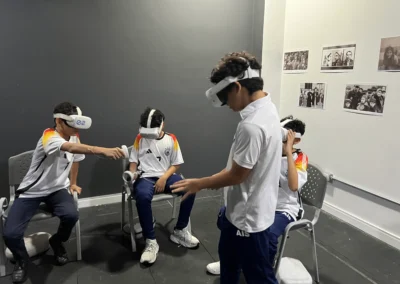
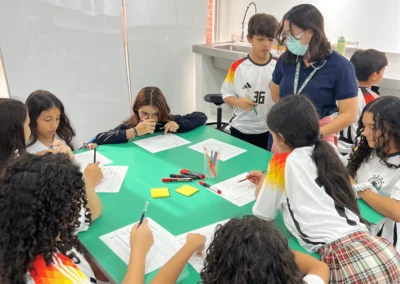
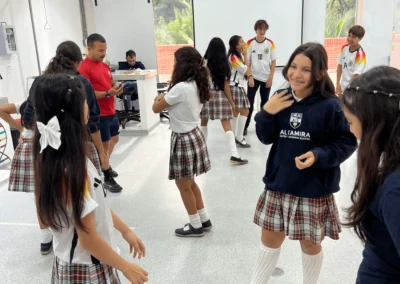
Seventh graders explored how genetic changes affect traits by working with DNA models and translating those concepts into baking experiments. By treating recipes as “genes” and muffin outcomes as “traits,” students tested mutations, analyzed data, and engineered improved “Super-Muffins” for specific users. The week ended with a Genetics Café where they presented their creations using clear scientific reasoning.
Driving Question:
¿How can understanding genetic instructions help us design and create improved products that meet real human needs?
Purpose of the Project:
To help students understand how genetic information influences traits by modeling mutations, analyzing their effects, and applying this knowledge to design improved, real-world solutions through hands-on experimentation and scientific reasoning.
Objectives of the Project:
-
Model how changes in genetic instructions can alter traits in an organism or system.
-
Use experimentation and data analysis to test how “mutations” affect final outcomes.
-
Apply scientific reasoning to design and justify improved products that meet specific user needs.
The Question That Changed Everything
It started with a simple observation during lunch. Seventh graders were comparing their sandwiches when someone asked: “Why does my sister have curly hair but mine is straight? We have the same parents!”
That innocent question sparked a week-long journey that would take our students from DNA sequences to dog breeds, from genetic mutations to muffin recipes, and ultimately to understanding one of life’s most fundamental principles: how tiny changes in our genetic instructions create the incredible diversity we see around us.
Welcome to the story of how our 7th graders became genetic engineers, master bakers, and scientific entrepreneurs – all in five unforgettable days.
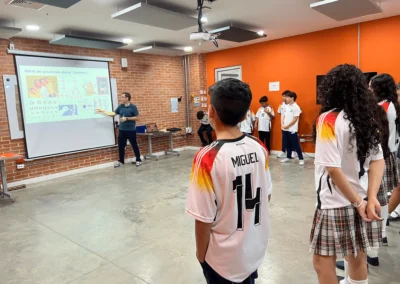
Question for this week:
¿How can understanding genetic instructions help us design and create improved products that meet real human needs?
Monday: Meeting the G-Dogs and Discovering Destiny in DNA
Morning: The Awakening
The Innovation Center buzzed with anticipation as students entered to find something unexpected: pictures of dozens of dog breeds covering every surface. From tiny Chihuahuas to massive Great Danes, from wrinkled Bulldogs to elegant Greyhounds.
“Today, you’re not just students – you’re genetic engineers,” we announced. “And these dogs? They’re your first patients.”
The G-Dog Revolution
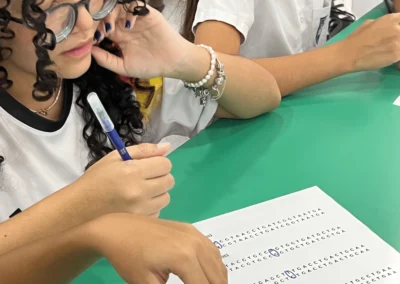
Enter the G-Dogs – our simplified genetic models that would make the invisible visible. Each trait controlled by a single gene, each gene a sequence of DNA letters that students could actually read, change, and understand.
Santiago held up his team’s first G-Dog card:
- Gene H: ATGCCATGGA = straight hair
- Gene L: CCTTACGATA = long legs
“Wait,” he said, eyes widening. “So if we change just ONE letter…”
And that’s when the magic began.
The Mutation Investigation
Each team received a mysterious envelope containing:
- A mutated DNA sequence
- An environment card (Arctic rescue, City apartment, Desert runner)
Isabella’s team discovered their G-Dog had a deletion in the leg gene – one missing letter that would make their dog’s legs shorter. But their dog lived in the mountains, needed to run through snow…
“This is terrible for the dog!” exclaimed Carlos. Then he paused. “But wait… what if it lived in a small apartment instead?”
The First Big Revelation: The same mutation could be beneficial, neutral, or harmful depending on WHERE the dog lived. Context matters. Environment matters. One size doesn’t fit all.
The Ethical Moment
As teams presented their mutated G-Dogs, María raised her hand with a troubled expression:
“We made our dog ‘cuter’ with the floppy ear mutation, but… can it hear predators as well? Are we hurting it just to make it adorable?”
The room fell silent. This wasn’t just about science anymore. It was about responsibility.
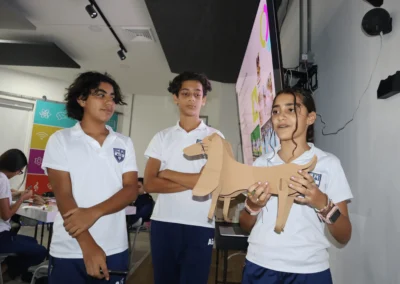
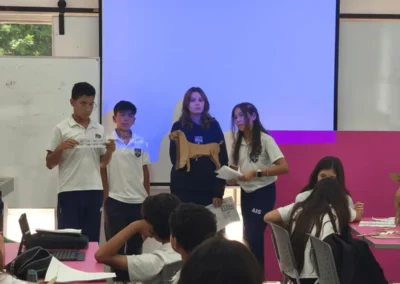
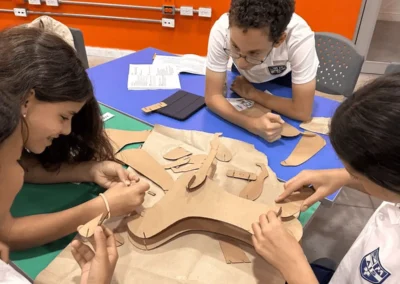
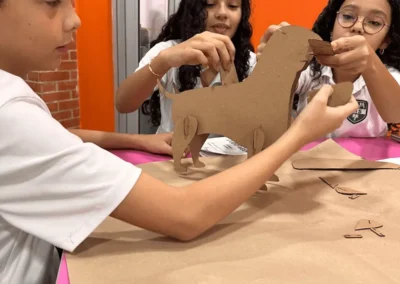
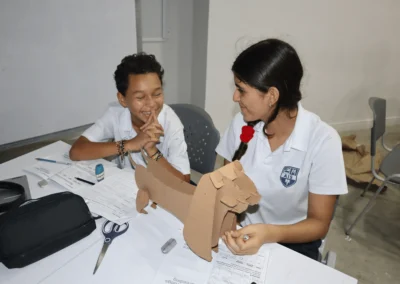
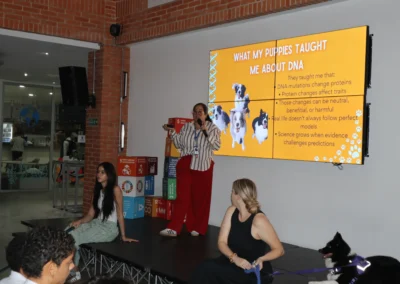
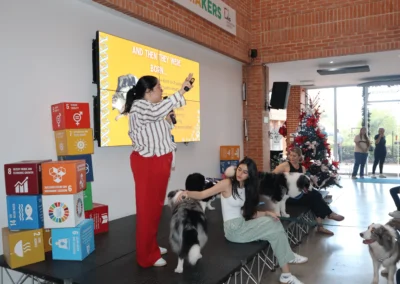
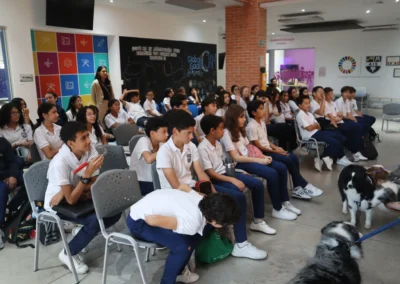
Day 1 Discovery: Every genetic change has consequences. What looks good to us might not be good for the organism.
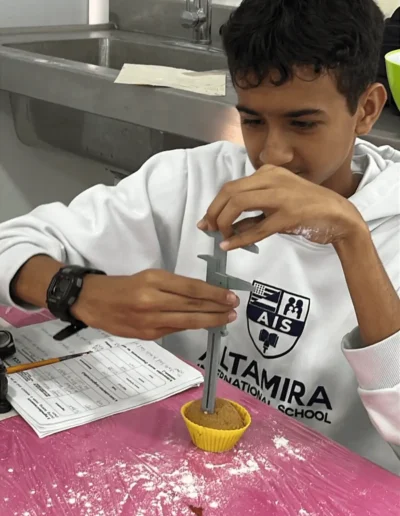
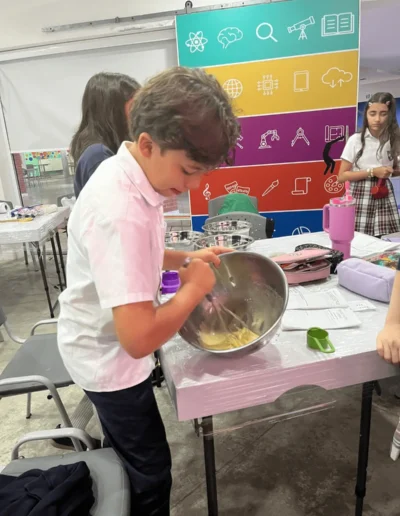
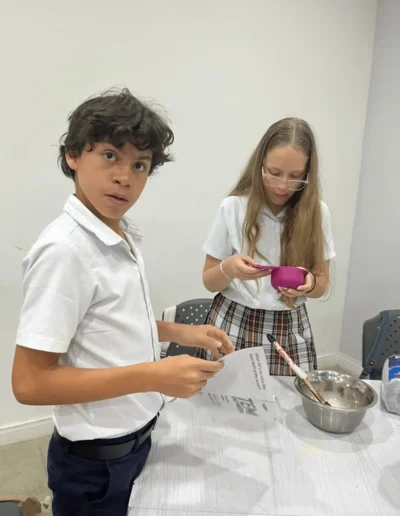
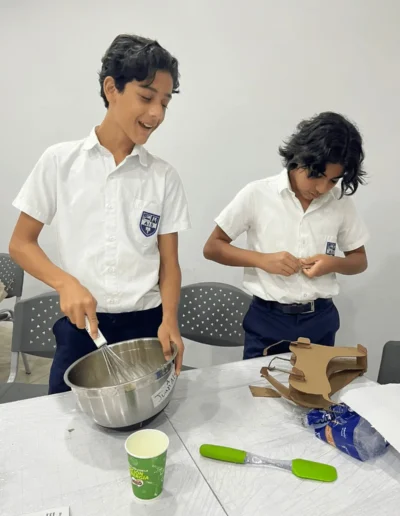
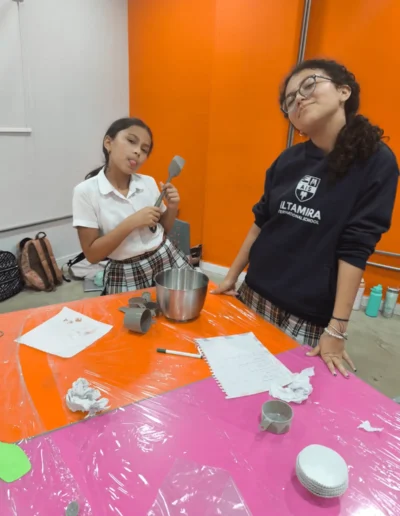
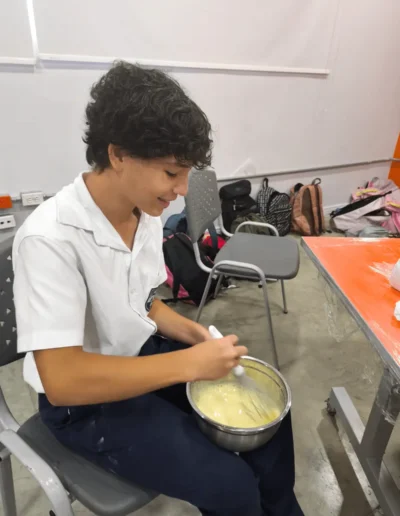
Day 2 Discovery: Cooking IS chemistry. Recipes ARE genetic instructions. We can model genetics with FOOD!
Tuesday: When DNA Became Delicious
The Kitchen Laboratory
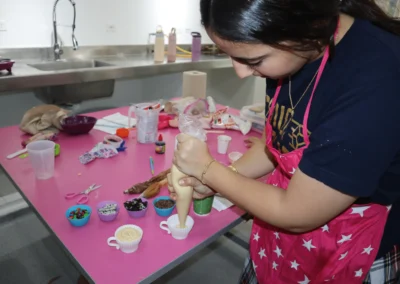
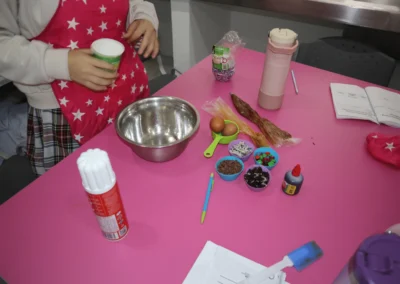
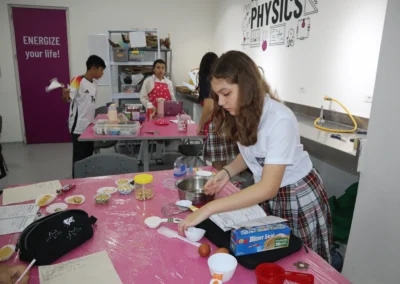
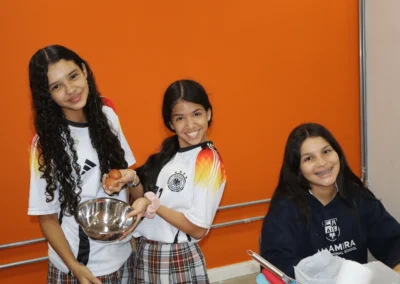
Tuesday morning transformed our Innovation Center into a bakery-laboratory. The smell of vanilla filled the air as students donned aprons and chef hats. But this wasn’t ordinary cooking – this was genetic engineering with flour and eggs.
The Master Muffin Revelation
Our kitchen assistant demonstrated the control recipe while students frantically took notes. But then came the twist:
“In genetics, we have DNA → Protein → Trait. Today, in our kitchen, we have Recipe → Chemical Structure → Muffin Characteristic. They’re the SAME SYSTEM!”
Watch as understanding dawned on faces:
- Recipe instructions (Gene) = the DNA code
- Gluten networks, foam structures (Protein) = what gets built
Height, moisture, texture (Trait) = what we can observe
The Great Ingredient Investigation
While muffins baked, teams researched each ingredient’s molecular role:
Tomás discovered: “Eggs don’t just add protein – they create foam structures that trap air!”
Ana realized: “Sugar isn’t just for sweetness – it affects browning through something called the Maillard reaction!”
Lucas connected: “So if eggs are like the ‘height gene’ of muffins, then changing the amount would be like a mutation!”
Planning the Mutations
Armed with their research, teams designed four mutations:
- Substitution: Replace wheat flour with almond flour
- Insertion: Add chocolate chips (a new “genetic sequence”)
- Deletion: Forget the milk entirely
- Translocation: Add salt to eggs BEFORE beating (changing the order)
“We’re literally going to mutate our muffins!” shouted Diego with glee.
Wednesday: The Day of Delicious Disasters
Morning: The Mutation Experiments Begin
Four ovens. Four mutations. Infinite possibilities for disaster.
Trial A – The Almond Substitution
Emma’s team watched anxiously as their almond-flour muffins baked. The timer rang. They opened the oven…
“They’re… flat. Completely flat.”
But then came the analysis: “Of course! Almond flour has no gluten. No gluten = no structure = no rise!”
They’d just discovered the molecular reason for their muffin’s failure. This wasn’t disappointment – it was DATA!
Trial B – The Chocolate Chip Insertion
Meanwhile, Roberto’s team added chocolate chips, expecting perfection. Instead, their muffins tilted sideways, chocolate weighing down one side.
“The chocolate disrupted the batter structure!” realized Sofía. “It’s like adding a heavy mutation that throws everything off balance!”
Trial C – The Milk Deletion
The most dramatic failure came from the no-milk trial. What emerged from the oven looked more like cookies than muffins – flat, hard discs.
Alejandro measured: “Height: 0.8 cm. Control was 4.2 cm. That’s an 81% reduction!”
“Without milk, there’s no moisture for the gluten to develop,” explained Valeria. “It’s like trying to build with dry sand instead of wet sand.”
Trial D – The Order Translocation
The subtle mutation – adding salt to eggs before beating – produced the most interesting discussion:
“It’s only 15% shorter,” noted Camila. “But look – it’s denser, more cake-like.”
“The salt interfered with the foam formation!” concluded Martín. “Same ingredients, different order, totally different result!”
Afternoon: Designing the Super-Muffin
Now came the entrepreneurial challenge: Design a muffin for a specific user using beneficial mutations.
Teams chose their targets:
- Diabetic adults (less sugar, more fiber)
- Athletes (high protein, sustained energy)
- Gluten-intolerant customers (no wheat)
- Vegan consumers (no eggs or dairy)
The Innovation Center became a strategic planning room. Whiteboards filled with molecular diagrams, market analysis, and recipe modifications.
“If we combine the almond flour mutation with extra eggs, we get high protein AND maintain structure!” – Andrea’s athletic muffin team
“We can replace eggs with banana – it adds binding AND natural sweetness!” – Pablo’s vegan team
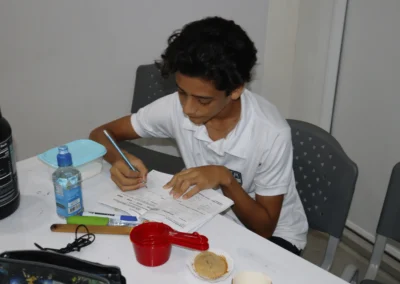
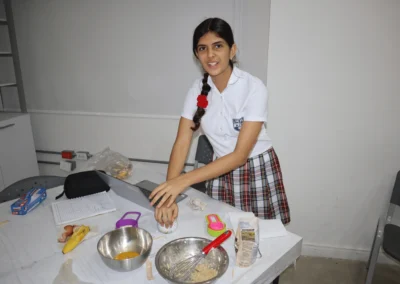
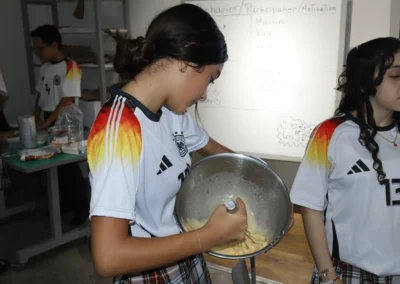
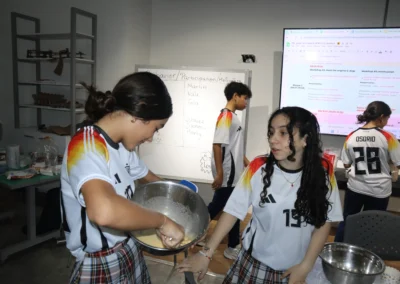
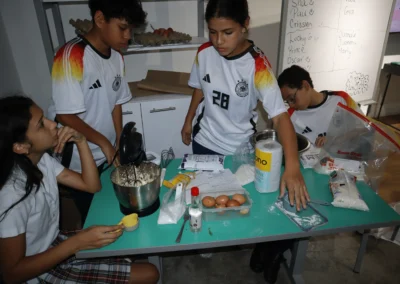
Day 3 Discovery: Failure is data. Multiple mutations can work together. Science can solve real human needs.
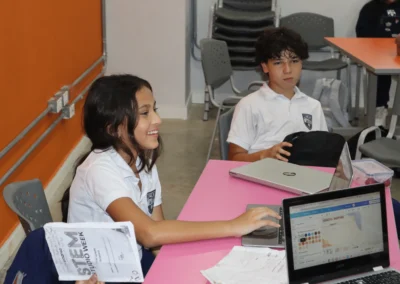
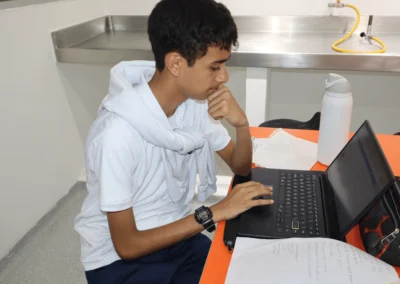
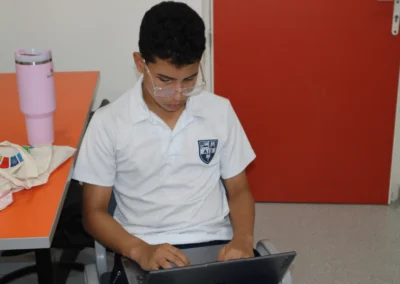
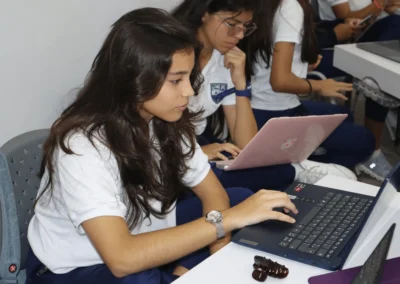
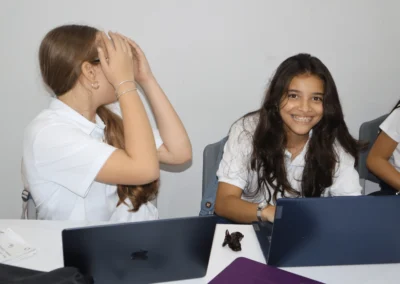
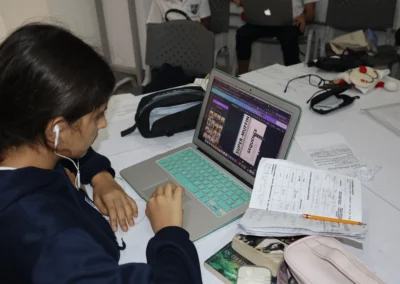
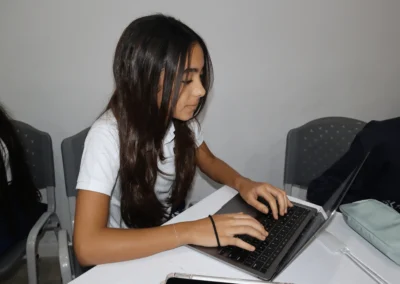
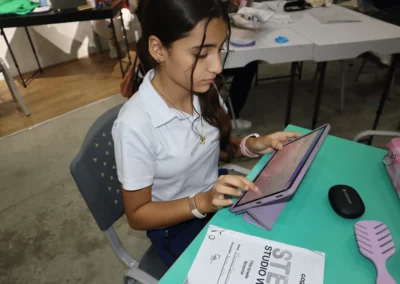
Day 4 Discovery: Data drives design. Science requires evidence. Every design decision can be justified molecularly.
Thursday: The Science of Justification
Morning: The Data Tells the Story
Tables covered with measurement tools, data sheets, and muffin samples. Teams conducted their final tests with scientific precision:
- Height measured to the millimeter
- Moisture scored on a 5-point scale
- Density calculated using displacement
- Taste tests with blind sampling
The CER Challenge
Now came the ultimate test: Could they explain their creation using scientific reasoning?
Claim: State what you created and who it serves Evidence: Present your data Reasoning: Connect Gene → Protein → Trait → User Need
Watch Isabella’s team present their diabetic-friendly muffin:
“CLAIM: Our Super-Muffin is ideal for diabetic adults because it’s less sweet but more satisfying.
EVIDENCE: Sweetness decreased from 5/5 to 2/5. Fiber content increased by 300%. Density increased from 2/5 to 4/5.
REASONING: By substituting 50% wheat flour with oat flour (GENE), we reduced simple carbohydrates and increased beta-glucan fiber structures (PROTEIN), resulting in slower sugar absorption and increased satiety (TRAIT), which helps diabetic users manage blood glucose (USER NEED).”
The room applauded. They weren’t just baking – they were doing molecular gastronomy with medical applications!
The Innovation Competition
Teams iterated their recipes three times, each adjustment guided by data:
“Version 2 was too dense, so we added 10% more baking powder to increase CO₂ production…”
“The taste test showed it needed more sweetness, but we can’t add sugar for diabetics, so we increased vanilla for aromatic sweetness perception…”
By afternoon, each team had created something remarkable: a scientifically-designed solution to a real problem.
Friday: The Genetics Café Opens Its Doors
Morning: The Professional Touch
The Innovation Center transformed into an upscale genetics café. Students created:
- Professional recipe cards with molecular diagrams
- Nutrition labels with genetic explanations
- Marketing materials linking traits to user benefits
- Sample stations with tasting notes
The Parent Invasion
At 2 PM, parents arrived to find their children transformed into genetic consultants, molecular gastronomists, and scientific entrepreneurs.
Presentation Highlights
Lucas’s Athletic Performance Muffin Team: Standing beside a poster showing protein molecular structures, Lucas explained to a group of parents:
“See, by adding whey protein powder – that’s our ‘insertion mutation’ – we create additional amino acid chains that support muscle recovery. But too much protein makes it dry, so we balanced with extra banana for moisture. It’s all about molecular equilibrium!”
His mother whispered to another parent: “Is this really my son? Last week he couldn’t explain why ice melts!”
Sofía’s Gluten-Free Team: With samples arranged beautifully, Sofía demonstrated:
“The challenge with gluten-free is structural integrity. Gluten is like molecular scaffolding. Remove it, and everything collapses. So we engineered a replacement system using xanthan gum and egg proteins to create alternative molecular networks. Try it – you can’t tell the difference!”
A parent with celiac disease tasted it, eyes widening: “This is better than what I buy at specialty stores!”
The Unexpected Moment
The most powerful moment came from quiet David, presenting his team’s “Comfort Muffin” designed for hospital patients:
“We researched that chemotherapy patients often lose taste sensitivity and have nausea. So we enhanced ginger (anti-nausea compound) and increased aromatic compounds for smell-triggered appetite. The genetics taught us that small changes can help real people.”
His grandmother, a cancer survivor, hugged him with tears in her eyes.
The judge's Verdict
Dr. Patricia Gómez, a biochemist parent and guest judge, announced:
“I’ve seen university students with less understanding of molecular biology than these seventh graders showed today. They didn’t just learn genetics – they APPLIED it to solve real problems.”
Day 5 Discovery: Science is personal. Learning is powerful when it helps others. Seventh graders can think like scientists.